


The Big Picture
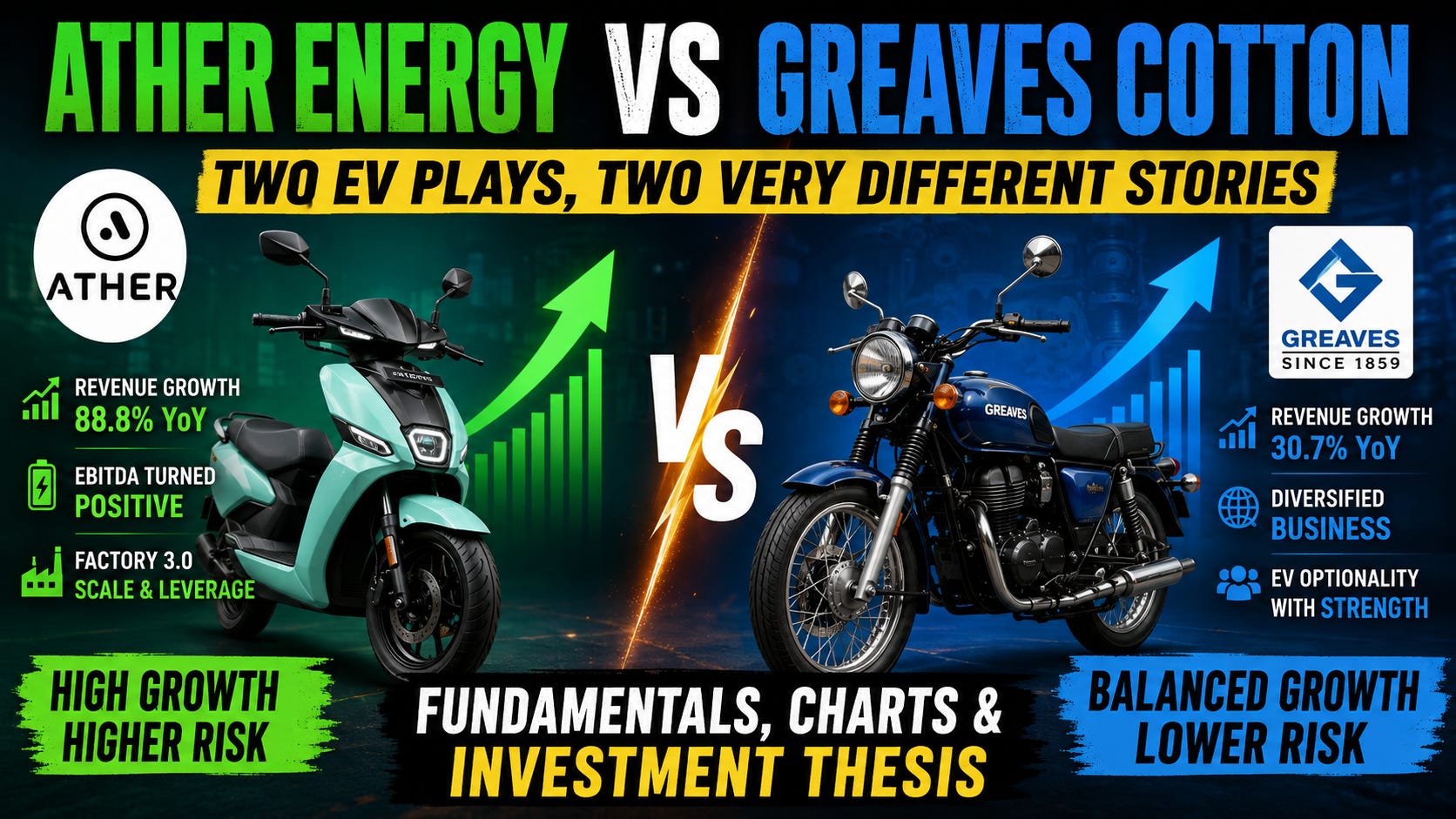
Ather Energy and Greaves Cotton are both positioned to benefit from India’s electric-mobility transition, but they represent very different investment propositions.
Ather is a relatively pure-play electric two-wheeler growth story. Its revenue and volumes are expanding rapidly, market share is improving and losses are narrowing sharply. Greaves Cotton, meanwhile, is a diversified engineering and mobility business where electric mobility is becoming an important growth engine alongside its established engines, engineering and aftermarket businesses.
The key question is therefore not simply which company has greater EV exposure but whether investors prefer higher growth with higher valuation and profitability risk, or diversified growth with a more established earnings base.
Ather Energy: Growth Is Accelerating
Ather’s FY26 performance was strong. Revenue from operations reached roughly ₹3,672 crore, up about 63% year-on-year. Vehicle volumes increased 69% and the company’s EV two-wheeler market share reached 18.6%.
The more important development came in Q1 FY27. Revenue jumped 88.8% YoY, while vehicle deliveries increased about 80.5%. EBITDA turned positive and net loss narrowed sharply to ₹51 crore from ₹178 crore.
This is potentially the most important part of the Ather story that the company is moving from a volume-growth story towards an operating-leverage story.
However, Ather is still loss-making at the PAT level, while trailing earnings remain negative, the valuation therefore assumes substantial future growth and a meaningful improvement in profitability.
Greaves Cotton: Slower Growth, Stronger Financial Base
Greaves’ FY26 consolidated revenue reached approximately ₹3,437 crore, up about 18% YoY. More importantly, the company moved from a consolidated PAT loss of ₹6.3 crore in FY25 to a profit of about ₹35.3 crore in FY26. Its established businesses remain an important stabilising factor.
Q1 FY27 revenue was even stronger, rising 30.7% YoY. However, profitability was mixed: EBITDA was around ₹56 crore, and consolidated PAT was only about ₹6 crore, with PBT falling year-on-year.
Greaves therefore does not match Ather’s top line, but its investment case is less dependent on one business. Energy, Mobility and Industrial Solutions, international business and aftermarket operations provide diversification, while Electric Mobility provides exposure to the rapidly growing EV market.
That combination gives Greaves a potentially attractive “core business plus EV optionality” structure.
Revenue and Sales Growth: Ather Has the Edge
On growth, the comparison is relatively clear.
Ather’s FY26 revenue growth was around 63%, followed by nearly 89% YoY revenue growth in Q1 FY27. Vehicle volumes are also expanding at exceptionally high rates.
Greaves grew consolidated revenue around 18% in FY26 and approximately 31% in Q1 FY27.
If the investment thesis is based primarily on revenue acceleration, EV adoption and market-share gains, Ather is currently the stronger story.
But growth comes at a price. Ather has yet to establish sustainable positive PAT, whereas Greaves already has profitable established businesses supporting the group.
Future Growth Drivers
For Ather, the biggest catalyst is the EL platform and Factory 3.0. The company has planned a total Factory 3.0 capacity of up to 10 lakh E2Ws annually, the first phase adding approximately 5 lakh units. It is expected to improve scale and vertical integration, potentially lowering unit costs.
The expansion of the retail and service network, the Rizta franchise, software and connected features, charging infrastructure and increasing non-vehicle revenue can further strengthen the ecosystem.
For Greaves Cotton, a key growth catalyst is the scaling up of Ampere and Greaves Electric Mobility. Ampere crossed four lakh cumulative electric-scooter sales in June 2026, while Greaves Electric Mobility recorded 51% year-on-year growth in FY26 registrations, increasing its market share from 3.6% to 4.4%. The company has also reportedly added 50+ experience centres across 15 states, doubling its network to over 600 in just over a year, potentially strengthening customer reach, brand visibility and after-sales support. To fund its next phase of growth, Greaves Electric Mobility raised ₹530 crore through a rights issue, but the investment thesis ultimately depends on whether rising volumes and a wider distribution network translate into sustainable market-share gains.
International expansion, aftermarket growth, industrial applications, financing through Greaves Finance and increasing EV penetration could create multiple growth engines rather than relying solely on the electric-scooter business.
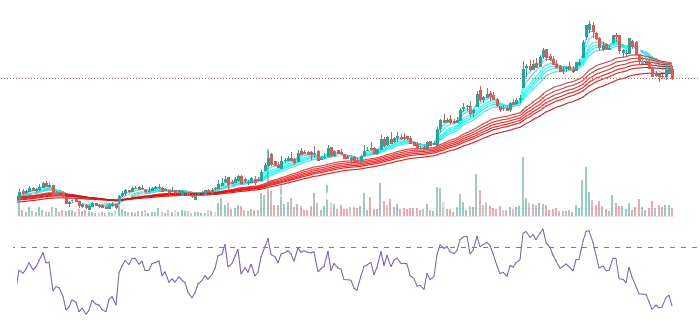
Daily Chart: Ather Energy
Ather’s daily chart has weakened after its September peak near ₹1,744. The stock has been forming a corrective structure, with recent trading concentrated around ₹1,400–1,460.
The technical picture remains cautious. RSI was around 42 and the stock was below its 20, 50, 100 and 200-day moving averages in the latest technical reading, indicating that the medium-term momentum had weakened.
The ₹1,385–1,400 area becomes an important near-term support zone, while ₹1,450–1,470 is the first recovery hurdle. A decisive move above ₹1,500–1,550 would improve the technical structure substantially. For now, the chart suggests wait-for-confirmation rather than aggressive chasing.
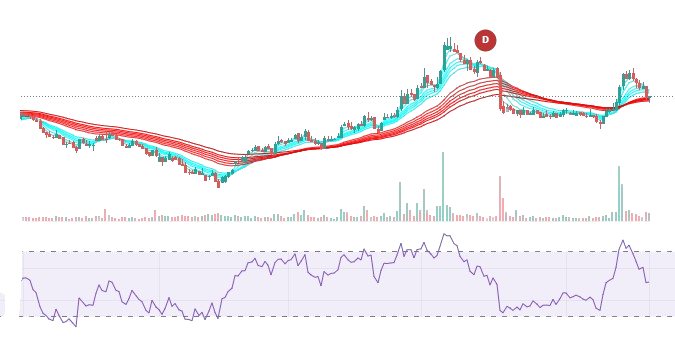
Daily Chart: Greaves Cotton
Greaves has also entered a correction after reaching a 52-week high close to ₹272. Its six-month performance, however, remains strong, with the stock still substantially above its 52-week low.
The immediate technical battle is around ₹200. Holding this zone could create the base for a recovery towards and subsequently higher levels.
Investment Thesis
Ather Energy — Higher Growth, Higher Risk
The fundamental story is attractive. Revenue growth is exceptional, volumes are scaling rapidly, market share is rising and EBITDA is positive now. The EL platform and Factory 3.0 could provide the next major leg of growth.
Investment stance: Positive on the long-term business; accumulate preferably on meaningful corrections rather than chase momentum.
Greaves Cotton — More Balanced Risk-Reward
Greaves lacks Ather’s explosive growth profile but offers something Ather does not: a diversified operating base and an established profitable core. Its EV subsidiary is growing rapidly and receiving additional capital, creating meaningful optionality if Ampere gains market share.
Investment stance: Constructive for medium-to-long-term investors, particularly if the stock stabilises around the ₹200 area.
Bottom Line
If the objective is maximum growth exposure to India’s electric two-wheeler transition, Ather currently has the stronger fundamental growth trajectory.
If the objective is a more diversified mobility/engineering investment with EV upside and an established earnings base, Greaves Cotton appears better balanced.
The interesting distinction is therefore:
Ather Energy represents a growth-driven investment story, with potential operating leverage as volumes scale, but it also carries higher valuation risk. Greaves Cotton, offers diversification and EV growth optionality, with lower business-concentration risk.
For a long-term portfolio, Ather may offer the greater growth opportunity, while Greaves may offer the more balanced risk-adjusted opportunity.
Disclaimer
This report is for educational and informational purposes only and is not investment advice or a recommendation to buy or sell any security. Investors should conduct their own research and consider their risk profile before taking any investment decision. Financial results, valuations and technical levels can change rapidly.