



CPSE ETF (Central Public Sector Enterprises ETF) provides concentrated exposure to India’s most profitable and strategically important public sector undertakings (PSUs). Trading near ₹99.8 (Feb 2026), the ETF combines high dividend yield (4–5%), attractive valuations (P/E ~13x), and strong government policy tailwinds.
Over the past five years, CPSE ETF has delivered ~33–35% CAGR, significantly outperforming broader indices, driven by PSU balance sheet repair, capex revival, and valuation re-rating. While not a high-growth ETF, CPSE ETF offers a compelling income + stability + moderate growth proposition for long-term investors.
Portfolio Composition & Sector Exposure
The CPSE ETF maintains a concentrated portfolio of India’s leading public sector enterprises, with the largest allocations in Bharat Electronics (around 20%), NTPC (around 20%), and Power Grid Corporation (around 19%), reflecting strong exposure to defence electronics and regulated power utilities. This is followed by ONGC at approximately 14% and Coal India at about 13%, providing significant weight to India’s energy security and natural resource backbone. The remaining allocation is spread across NHPC, Oil India, Cochin Shipyard, NBCC, and SJVN, adding diversification within the PSU ecosystem.
From a sectoral perspective, the portfolio is heavily skewed toward Energy and Utilities, which together account for roughly 65% of the ETF, ensuring stable and predictable cash flows. Capital Goods and Defence contribute about 20%, benefiting from rising government spending and strategic importance, while Materials and Mining form around 13%, offering exposure to core industrial inputs. This portfolio structure provides investors with access to monopolistic or oligopolistic businesses, characterized by strong balance sheets, consistent cash generation, and high entry barriers, which enhance long-term earnings stability and downside protection.
Performance Snapshot
1-Year Return: ~20%
3-Year CAGR: ~37%
5-Year CAGR: ~35%
Since Inception: ~15–16% CAGR
The ETF has consistently outperformed fixed income, gold, and several equity benchmarks over medium-to-long horizons.
Macro & Policy Tailwinds
Government & Budget Support
FY27 disinvestment target: ₹80,000 crore
Shift from outright sales to stake monetization & asset unlocking
PSU capex expected to grow 10–12% annually
Sectoral Drivers
Energy security: Domestic oil, gas, and coal production focus
Power demand growth: 6–7% annually
Defence modernization: Strong order inflows for BEL
Infrastructure push: ₹111 lakh crore National Infrastructure Pipeline
Dividends
Oil & energy PSUs alone expected to distribute ₹70,000+ crore in dividends, reinforcing CPSE ETF’s income appeal .
Why Valuations Remain Attractive
40–45% discount to broader market multiples
Strong balance sheets and reduced leverage post-FY21
Stable earnings visibility from regulated and monopolistic businesses
Valuation Insight:
CPSE ETF is not a growth ETF; it is a cash-flow, dividend, and stability ETF, with valuation support acting as a downside cushion.
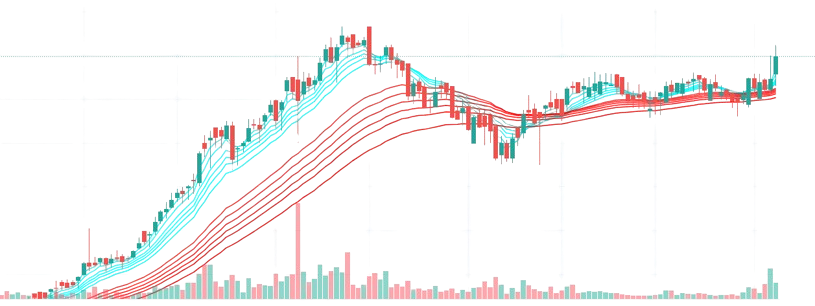
Over the medium term of 6–12 months, CPSE ETF is positioned for high single-digit to low double-digit growth, supported by improving earnings visibility, stable dividends, and a gradual valuation normalization across PSU stocks. The recent consolidation phase has strengthened the base, allowing for approximately 8–15% potential appreciation, assuming normal market conditions and continued policy support.
Looking at a longer horizon of 18–36 months, the growth outlook improves meaningfully. Under a base scenario, sustained earnings compounding and steady dividend reinvestment could translate into around 20–30% cumulative growth. In a more optimistic environment—where PSU re-rating, stronger capex execution, and higher return ratios play the ETF could potentially deliver 35–50% cumulative growth over the long term. Importantly, downside risk remains relatively contained due to strong support from valuations, cash flows, and sovereign backing, resulting in a favorable risk–reward profile for patient investors.
Risks to Monitor
Government policy or dividend distribution changes
Commodity price volatility (oil, coal)
Execution delays in large PSU capex projects
Sector concentration (energy-heavy exposure)
PSU underperformance during sharp bull-market rotations
Mitigating Factors: diversification across 11 PSUs, sovereign backing, strong cash flows, and low valuations.
Conclusion & Investment View
CPSE ETF stands out as a high-quality PSU basket offering:
Predictable dividends
Attractive valuations
Exposure to India’s energy, power, and defence backbone
Low-cost, transparent, passive structure
It may underperform in euphoric bull markets but historically performs well in volatile, sideways, or valuation-driven phases.
Final Take
Suitable for: Conservative to moderate investors, income seekers, long-term allocators
Ideal allocation: ~20–30% of equity exposure alongside growth-oriented funds
Strategy: Accumulate on dips or via staggered investments rather than momentum chasing
CPSE ETF remains a compelling blend of income, stability, and long-term India PSU upside.
Disclaimer
This analysis is intended solely for informational purposes and does not constitute any investment or financial advice. All information is sourced from public company filings, analyst reports, and third-party sources believed to be reliable. In accordance with SEBI guidelines, market data is presented accordingly. Investors should conduct independent research, perform due diligence, and consult qualified financial advisors before making any investment decisions. The views expressed are personal and may be subject to errors or bias.