


The Snapshot
AI has emerged as one of the defining investment themes of the twenty-first century. The rapid expansion of generative AI has triggered an extraordinary investment cycle spanning semiconductors, GPUs, high-bandwidth memory, networking equipment, cloud computing, data centres, power infrastructure and computational capacity. Few investment firms embraced this transformation more decisively than Situational Awareness LP.
Founded in late 2024 by AI researcher Leopold Aschenbrenner, the fund was built around a straightforward but powerful proposition: the companies supplying the infrastructure required for the AI revolution could become some of the greatest beneficiaries of the coming decade. For a period, the thesis appeared remarkably successful.
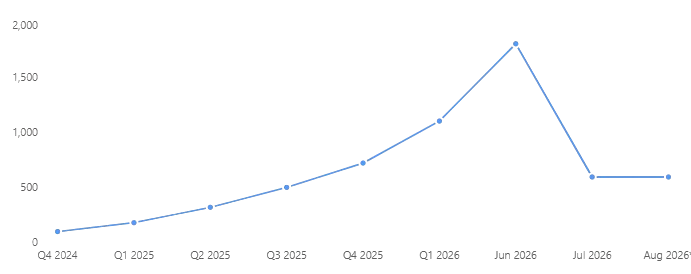
Situational Awareness expanded at extraordinary speed as strong performance, institutional enthusiasm and the accelerating AI capital-expenditure cycle reinforced one another, making the fund one of the fastest-growing AI-focused investment vehicles of its generation. But the same characteristics that powered its rise—high conviction, concentration and leverage—also created significant vulnerabilities.
When AI infrastructure stocks experienced a sharp correction in July 2026, falling asset values triggered margin calls and forced liquidations. The fund suffered a severe decline during July, while a substantial portion of its listed portfolio was sold to meet financing obligations.
The episode is therefore more than a story about one hedge fund. It is a case study in the difference between having a correct investment thesis and constructing a portfolio capable of surviving long enough for that thesis to play out
Executive Summary
Financial history shows that technological revolutions attract enormous amounts of capital—and often create both extraordinary opportunities and significant investment risks. Rising optimism can quickly lead to crowded trades, stretched valuations and excessive leverage.
Situational Awareness LP emerged at the heart of the AI investment boom. Founded by AI researcher Leopold Aschenbrenner, following his 2024 essay “Situational Awareness – The Decade Ahead,” (Introduction - SITUATIONAL AWARENESS: The Decade Ahead) the fund built its strategy around a powerful idea: investors did not need to predict the ultimate winners in AI applications; they could invest in the infrastructure required by the entire AI ecosystem.
The strategy benefited enormously during 2025 and early 2026 as AI spending surged, technology companies increased capital expenditure and investors crowded into AI infrastructure stocks. But success also created vulnerabilities. Concentration increased, valuations became demanding, and leverage magnified the portfolio’s exposure to a market reversal.
When AI infrastructure stocks corrected sharply, the problem moved beyond price declines—it became a liquidity event.
Declining asset values reduced collateral, triggering margin calls and forced selling. Forced selling pushed prices lower, creating further margin pressure and accelerating the decline.
That distinction is perhaps the most important lesson from the Situational Awareness episode: a powerful investment idea can still produce a disastrous outcome when concentration, leverage and liquidity risk overwhelm conviction.
Investing in Revolutions
Every technological revolution creates two parallel stories: innovation and investment.
Innovation reshapes industries, improves productivity and creates business models. Financial markets, however, often move ahead of the transformation, pricing future growth long before it fully materialises.
Artificial Intelligence is a powerful example.
The rise of generative AI triggered an unprecedented investment cycle across semiconductors, GPUs, memory, networking, cloud computing, data centres and power infrastructure. What began as a technology trend quickly evolved into what many investors viewed as a once-in-a-generation investment opportunity.
Situational Awareness LP was created at the centre of this transformation. Its key insight was simple: rather than trying to predict which AI application would ultimately win, invest in the infrastructure required by the entire AI ecosystem.
The Birth of Situational Awareness LP
The origins of Situational Awareness LP are closely linked to its founder, Leopold Aschenbrenner. In April 2024, Aschenbrenner departed OpenAI after gaining recognition for his AI research and views on the future of artificial intelligence. Two months later, he published “Situational Awareness: The Decade Ahead,” arguing that Artificial General Intelligence could arrive much sooner than many expected. The essay attracted significant attention across Silicon Valley and the investment community.
Later in 2024, he founded Situational Awareness LP, building an investment strategy around companies positioned to benefit from or be disrupted by the AI revolution.
Investing in the Infrastructure Rather than the Applications
Situational Awareness LP’s distinguishing feature was not simply investing in AI, it was investing in the ecosystem that enables AI.
The fund believed that predicting the ultimate winner in AI applications would be extremely difficult. Infrastructure providers, however, could potentially benefit regardless of which applications ultimately succeeded.
Every advanced AI system requires computing power, processors, high-bandwidth memory, networking, cloud capacity, data centres, cooling, specialised construction and reliable electricity.
This led to a simple investment principle: invest in the infrastructure required by the entire AI economy rather than betting on a single application winner.
Portfolio Construction: Conviction over Diversification
The greatest strength of the strategy was also one of its greatest weaknesses. The Fund believed that exceptional research justified concentrated investment. Instead of spreading capital across unrelated sectors, the fund focused on a relatively small number of companies it believed would be the primary beneficiaries of the AI infrastructure cycle.
The philosophy was simple: Diversification protects investors against being wrong. Concentration rewards investors for being right.
During the AI boom, this approach worked exceptionally well. But it also created a significant vulnerability: many holdings were exposed to the same underlying factor of AI infrastructure valuations. When that factor turned against the portfolio, diversification across individual stocks offered limited protection because many of those businesses were economically interconnected. In other words, the portfolio was not truly diversified. It was diversified within a single macroeconomic theme. That distinction became critical when the AI infrastructure trade reversed.
The Meteoric Rise
Few investment funds have expanded as rapidly as Situational Awareness LP. Several forces drove this extraordinary growth:
· AI spending accelerated: Major technology companies announced massive capital-expenditure programmes to expand AI capabilities.
· Expectations kept rising: Forecasts for semiconductors, cloud computing, networking and power infrastructure were repeatedly revised upward.
· Investor enthusiasm intensified: AI evolved from a specialised technology theme into one of the dominant narratives in global markets.
· Performance reinforced the narrative: Strong returns attracted more institutional capital, creating a powerful feedback loo
When Success Creates Its Own Risks
The fund’s difficulties were not necessarily a failure of research. The bigger problem was structural. As assets grew, the portfolio became increasingly concentrated in the same AI infrastructure companies that had driven its success. At the same time, other institutional investors were building similar positions, creating a crowded trade.
Crowded trades can deliver exceptional returns while markets are rising. Their real vulnerability emerges when sentiment reverses, as investors holding similar positions may rush to sell at the same time.
The Collapse: When Markets Turn Faster Than Conviction
The transition from success to crisis was remarkably swift. After a powerful AI-driven rally through 2025 and early 2026, sentiment turned as valuations became increasingly demanding.
When AI infrastructure stocks corrected in July 2026, the fund’s concentration and leverage amplified the damage. The source material reports a massive decline during the month, along with the forced sale of a substantial portion of its public-equity portfolio.
The critical distinction was between price risk and liquidity risk. Price risk is a decline in asset values; liquidity risk arises when an investor is forced to sell regardless of long-term conviction.
That is what happened to Situational Awareness. Falling asset values reduced collateral, financing pressures increased, and forced selling accelerated the decline.
The fund was not simply losing money—it was losing the ability to wait.
The Liquidity Spiral
In a concentrated and leveraged portfolio, falling prices can quickly become a self-reinforcing cycle. Lower asset values reduce collateral, triggering margin calls and forced selling. That selling pushes prices lower, further reducing collateral and creating additional margin pressure.
Falling prices → Lower collateral → Margin calls → Forced selling → Further price declines → More margin calls
This is why leverage changes the rules of investing. An unleveraged investor can wait; a leveraged investor may be forced to sell.
The Fund Today: Collapse or Reinvention?
Calling Situational Awareness a failed or liquidated hedge fund would oversimplify the situation. The fund reportedly continued operating while undergoing restructuring, with a substantially smaller asset base following the restructuring.
The restructuring involved:
Significant reduction in public-market positions
Lower reliance on leverage
Greater focus on long-term private AI investments
Stronger risk-management practices
Liquidation ends an investment organisation; restructuring attempts to rebuild it. The future of Situational Awareness will therefore depend not only on the strength of its long-term AI thesis, but on whether its revised portfolio structure and risk controls can withstand future market volatility.
Was the Investment Thesis Actually Wrong?
This may be the most important question—and the answer is not necessarily.
The AI revolution did not end because AI-related equities corrected. Technology companies continued investing in advanced computing, while AI infrastructure remained strategically important. What changed was market pricing and investor sentiment.
A transformative technology can still become an overvalued investment. An investor can also correctly identify a long-term trend and lose money by paying too much, using excessive leverage or becoming too concentrated.
The Key Lesson
A correct investment thesis does not guarantee a successful investment outcome. The ultimate outcome depends on whether valuation, leverage, concentration, liquidity and position sizing allow an investor to remain invested long enough for the thesis to play out.
The Difference between a Good Idea and a Good Portfolio
An investment thesis and a portfolio are not the same thing. An investor can correctly identify a structural trend and select companies with strong growth prospects yet still suffer significant losses.
Portfolio outcomes depend on much more than the underlying idea—including position sizing, valuation, leverage, liquidity, correlation, concentration, financing arrangements and time horizon.
A brilliant investment idea does not automatically create a resilient portfolio. The real test of portfolio management is not simply maximising returns when the thesis works but managing risk well enough to survive when markets move against it.
Conclusion - From Vision to Volatility
Situational Awareness LP should not be remembered merely as a hedge fund that experienced severe losses. It should be remembered as a case study in the interaction between vision, conviction, leverage, valuation, liquidity and market structure.
The fund identified one of the defining technological trends of the decade with clarity. Its belief in the AI infrastructure cycle attracted enormous capital and, for a period, delivered extraordinary growth. But the same conviction that powered its success also increased its vulnerability. The episode demonstrated a timeless principle: a great investment thesis can still produce a disastrous investment outcome when portfolio construction is fragile.
The AI revolution itself did not end. The infrastructure build-out did not suddenly become irrelevant. What changed was the relationship between valuation, positioning, leverage and liquidity.
The lesson is broader than AI – “The future may reward investors who identify transformative trends early—but markets ultimately reward those who can survive long enough to see those trends mature.”
Disclaimer: This report is prepared solely for educational, informational and for a case study and should not be construed as investment, legal, tax, or financial advice. It is based on publicly available information and media reports, and certain figures and developments may evolve as additional information becomes available. Readers are advised to conduct their own independent research and consult qualified financial professionals before making any investment decisions. The author accepts no responsibility for any investment actions taken based on the contents of this report.