


Executive Summary
HEG Advanced Materials has shifted from graphite electrodes to an advanced-materials and energy-transition story, led by synthetic graphite anodes, renewable energy, battery storage and graphene.
The ₹5,500 crore post-demerger investment programme is the company’s key growth initiative.
The Demerger Changes the Analytical Framework
The demerger separated the graphite-electrode business into HEG Graphite, leaving HEG Advanced Materials focused on advanced materials and energy-transition opportunities.
This report is specifically about the continuing HEG Advanced Materials entity. Data relating to the two entities before the demerger may reflect the combined pre-demerger business and should not be interpreted as post-demerger HEG Advanced Materials financial performance.
The demerger shifts the valuation framework from legacy graphite earnings toward future growth.
The New Business Model
HEG Advanced Materials now spans four themes: battery materials, energy storage, renewable power and specialty materials.
Synthetic graphite anodes: Core growth driver, with the first 20,000-tonne commercial phase targeted for Q1 FY28 and ultimate capacity planned at 60,000 tonnes by FY32. The first facility can subsequently be expanded to 30,000 tonnes.
Graphene: A planned 150-tonne business with potential applications in roads, textiles, paints/coatings, anodes, lubricants and data centres. It remains a longer-term growth option rather than the primary near-term earnings driver.
Renewable power: Capacity is planned to expand from 292 MW in FY26 to 680 MW by FY28.
Battery storage: A 200-MWh Gujarat battery-energy-storage project is targeted for Q3 FY27.
Solar: A 300-MWp Chhattisgarh solar project is targeted for Q2 FY28.
Where the ₹5,500 Crore Goes
Business Standard reports that HEG Advanced Materials plans around ₹5,500 crore of post-demerger capex. Approximately ₹1,500 crore is planned as equity and ₹4,000 crore as debt, implying roughly a 27:73 equity-to-debt mix.
The largest allocation is toward battery-grade synthetic graphite anode materials, followed by the other renewable-energy, storage and advanced-material initiatives.
Why Synthetic Graphite Anodes Matter
Synthetic graphite is a key lithium-ion battery anode material and India remains significantly import-dependent, creating a domestic manufacturing opportunity.
Management expects India’s cell-manufacturing capacity to reach around 250 GWh by 2035, with graphite-anode demand potentially exceeding 100,000 tonnes by 2030. HEG sees synthetic graphite as particularly relevant for fast-charging applications and aims to become one of the larger global anode players outside China.
Price Discovery & Future Valuation
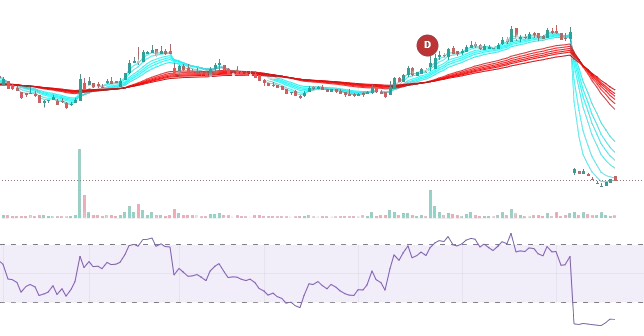
Post-demerger, HEG Advanced Materials is in a fresh price-discovery phase. After opening near ₹265 and falling to around ₹214, the rebound toward ₹248–250 and improving higher lows indicate emerging recovery, though sustained strength remains important.
Demerger does not itself create value; future valuation depends on earnings, growth and returns. FY2032 scenarios indicate potential multibagger outcomes, driven by capacity utilisation, revenue growth, margins, capital intensity and valuation multiples. These are analytical scenarios, not company guidance or price targets.
Technical Roadmap
The stock remains in a developing post-demerger price-discovery phase, with ₹220–235 acting as the key accumulation/support zone and ₹260–272 as the initial resistance. A sustained move above ₹272, followed by ₹290–315, would provide stronger confirmation of a Stage 2 transition. A break below ₹220 would weaken the setup.
Short term: Continued strength would support a move toward higher resistance zones and strengthen the developing recovery structure.
Medium term: Sustained momentum could lead to a broader breakout and reinforce the transition from base formation toward a Stage 2 advance.
Long term: A sustained Stage 2 uptrend could support significant further appreciation, but this would remain dependent on continued price strength, successful execution and improvement in the underlying business.
These are technical reference levels, not guaranteed targets, and volatility may remain elevated during the post-demerger price-discovery phase.
What the Volume Is Saying
Heavy volume during the sell-off followed by stronger volume on the rebound suggests selling pressure may be getting absorbed.
However, volume alone is not enough. Confirmation requires higher lows, a breakout above resistance and sustained participation. The structure therefore remains developing rather than a confirmed long-term uptrend.
Catalysts to Monitor
Key catalysts include commissioning of the first anode plant, customer approvals and contracts, progress toward 60,000-tonne capacity, renewable expansion, Gujarat storage project, Chhattisgarh solar project and commercialisation of graphene.
Further battery-storage orders and customer announcements would strengthen evidence that the portfolio is moving from strategy to commercial execution.
Risks That Can Break the Thesis
The key risks are execution, leverage and commercialization. Delays, cost overruns or slower ramp-up could strain returns on the debt-funded investment programme.
With approximately ₹4,000 crore of planned debt funding, capital efficiency, commissioning timelines and cash generation are particularly important.
Anode margins also face global pricing pressure, particularly from Chinese producers, while customer qualification may take longer than expected.
Other risks include post-demerger price volatility, weak materials-sector sentiment and slower-than-expected growth in India’s battery ecosystem, which could delay the valuation re-rating.
What Investors Should Track
Track six key milestones: commissioning, customer approvals, utilisation, pricing/margins, debt and capex discipline, and renewable/storage earnings.
Technically, monitor accumulation, initial resistance and the broader confirmation zone mentioned in the Technical Roadmap and the sustained weakness weakening the setup.
The strongest signal will come from operating progress supported by technical confirmation.
Equity Reads Scenario Outlook
The outlook depends primarily on execution. Slower capacity utilisation and global competition, while successful capacity expansion, customer wins, scale and improving cash generation could support significant value creation.
Equity Reads scenarios indicated the potential for multibagger returns over the medium to long term, with the extent depending on commissioning, customer qualification, capacity utilisation, margins, capital efficiency and cash generation. These are analytical scenarios, not forecasts or price targets.
Conclusion
HEG Advanced Materials has entered a new phase, shifting from graphite electrodes to advanced materials, batteries, renewable energy and storage.
The core opportunity is synthetic graphite anodes, supported by a substantial investment programme, an operating demonstration plant and customer qualification. At the same time, the planned debt component makes execution, capital efficiency and cash generation central to the thesis.
Technically, the stock remains in price discovery with an emerging accumulation structure.
Disclaimer: This report is for educational and informational purposes only and is not investment advice or a recommendation to buy or sell any security.
All price targets, valuations and scenarios are analytical views, not company guidance or guarantees. Business conditions and market valuations can change materially. Investors should conduct their own due diligence and seek professional advice where appropriate.
Equity Reads does not guarantee future outcomes or investment performance.
Data-period clarification: Where historical figures or valuation references relate to the period before the demerger, they concern the combined/pre-demerger businesses and are identified as such; post-demerger operating and capex information refers specifically to HEG Advanced Materials.