



Executive Summary
The demerger has given India Glycols a new identity. Its continuing business is now focused on specialty and green chemicals, while spirits, ethanol, biofuels and nutraceuticals have moved into separate entities.
That makes the story easier to evaluate—but also resets the earnings base. FY26 EBITDA of ₹690 crore and 16.20% margins belonged to the broader pre-demerger business and should not be carried forward BUT Q1 FY27, with about ₹345 crore revenue and ₹40 crore EBITDA, provides an early reference point for the new structure.
The demerger has changed the structure. The next few quarters will show whether it can change the earnings trajectory.
Why the Demerger Matters
The demerger changes the way India Glycols should be analysed.
Earlier, specialty chemicals, spirits, ethanol, biofuels and nutraceuticals sat within one broader structure, making the overall earnings picture harder to interpret. The separation gives each business a clearer strategic focus and a more distinct valuation framework.
For India Glycols, emphasis is now on specialty chemicals, green chemistry, exports, innovation and capital efficiency.
But the demerger is not automatically value-creating. It simply creates a cleaner platform. The numbers will have to prove whether the sharper focus is translating into stronger and more sustainable earnings.
India Glycols — Future Growth Drivers
Now opportunity rests on moving from a broader chemical portfolio toward a more specialised, higher-value business.
Specialty chemicals: A greater contribution from specialty and performance chemicals could improve both growth quality and margins.
Green chemistry: Bio-based chemicals, green solvents and bio-polymers provide a platform to participate in the shift toward sustainable alternatives.
Exports: International markets can diversify demand and create room for further growth in specialty and sustainable chemical products.
New products and capacity: Product development and targeted capacity additions could gradually improve the mix and reduce dependence on mature products.
Margins: This may be the most important variable to watch. The pre-demerger business reached 16.2% EBITDA margins, but the retained India Glycols now has to demonstrate stronger margins on its new business mix.
The opportunity, therefore, is not simply higher revenue. It is better-quality revenue with better margins and stronger returns on capital.
What Could Go Wrong?
The new structure does not remove the industry’s underlying risks.
Chemical markets can remain cyclical, while oversupply—particularly from China—can pressure prices and margins. Feedstock and energy costs can also make profitability volatile. At the same time, expansion in plants, technology and compliance requires capital and could weigh on cash flows.
The demerger itself does not create earnings. The real payoff depends on higher-value products, better utilisation, new customers, sustainable margins and disciplined capital allocation. If these improvements do not materialise, the structural benefits of the demerger may remain largely theoretical.
What Needs to Improve
For the demerger to translate into better shareholder economics, five things will matter most:
More specialty products may increase the contribution of higher-value chemicals.
Better use of bio-based capabilities may convert renewable-feedstock advantages into commercially attractive products.
Stronger exports may build international demand and diversify the customer base.
Capital discipline may improve balance capacity expansion with cash generation and returns.
Better earnings quality may help differentiated products, customer relationships and sustainable margins.
The objective is simple: turn a cleaner structure into stronger earnings, cash flows and returns.
Three Phases Ahead
Short term — Discovery: The market will begin establishing a valuation and earnings base for the post-demerger India Glycols. Margins, specialty products, exports and cash flow will be key signals.
Medium term — Execution: The focus shifts to product growth, capacity utilisation, exports, margins and capital allocation.
Long term — Platform: The larger opportunity lies in combining specialty chemicals, green chemistry, bio-based capabilities and international markets into a higher-value business.
The structure is now in place. The next phase is about execution.
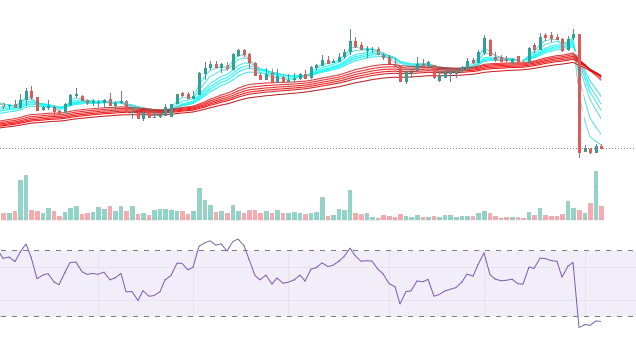
Equity Reads Technical View
Short term: The stock has seen a sharp post-demerger rally followed by profit-booking and consolidation. The immediate focus is whether it can hold the consolidation zone with healthy volumes.
Medium term: A higher-high, higher-low structure is beginning to develop, but confirmation is still required. A breakout from consolidation accompanied by strong volume would provide a stronger technical signal.
Long term: The chart is still in an early price-discovery phase. A sustained uptrend would require a stronger base, continued higher highs and higher lows, and improving volume.
The technical picture would become more convincing if price strength is accompanied by improving specialty-chemical growth, margins, cash flows and ROCE.
Overall: The setup is constructive, but confirmation matters. The coming quarters should reveal whether accumulation and earnings improvement are beginning to reinforce each other.
What Investors Should Watch
The demerger has moved the story from structural change to earnings discovery.
The most important indicators over the next few quarters will be specialty-chemical growth, new-product contribution, EBITDA margins, capacity utilisation, exports and operating cash flow. Investors should also track ROCE, working-capital efficiency, capex, debt, finance costs and customer diversification.
The critical question is whether the retained business can build on the margin improvement seen in FY26 with a stronger specialty-chemical mix.
In the post-demerger phase, quarterly execution will matter more than the demerger headline itself.
Bottom Line
India Glycols has changed its structure. What matters now is whether the numbers change with it.
For investors, the next phase is therefore less about the demerger announcement and more about earnings delivery quarter after quarter. The structure has changed; now the numbers have to prove it.
The early signs suggest that the growth opportunity is both visible and increasingly achievable. If the company can translate its transformed structure into sustained revenue growth, improving profitability and stronger cash generation, the story could move from structural change to fundamental value creation.
Fundamentals identify the opportunity. Price action provides confirmation. Position sizing manages risk. Time creates compounding.
And if the expected growth ultimately shows up in the numbers, India Glycols could evolve into a meaningful value-creation story for patient investors.
The structure has changed. The opportunity is emerging. Now, let the numbers do the talking.
Disclaimer
This report is for educational and informational purposes only and is based on publicly available information and company disclosures available at the time of preparation. It is not investment advice or a recommendation to buy or sell any security. Business performance, financial results and market conditions may change, and actual outcomes may differ. Investors should independently verify relevant information and consider their own objectives, risk tolerance and investment horizon.