


Some of the biggest wealth creators in the Indian stock market have emerged after corporate demergers, when the market took time to recognise the value of the newly separated businesses. The Hercules–Indef restructuring could be another such opportunity.
The demerger transformed the erstwhile Hercules Hoists into two focused listed entities — Indef Manufacturing Ltd, which houses the core engineering and material handling business and Hercules Investments Ltd, an investment holding company managing financial assets and strategic investments. While both companies continue to enjoy the backing of the highly respected Bajaj Group, the market is still discovering their standalone value.
Following the demerger, both stocks have undergone an extended period of consolidation and continue to trade below the combined value many investors expected immediately after the restructuring. Whether this represents temporary market inefficiency or a genuine value opportunity is the central question explored in this report.
Why the Demerger Matters
Corporate demergers are designed to unlock value by allowing each business to pursue its own strategy, improve capital allocation, and receive an independent market valuation.
The Hercules demerger created two distinctly different investment stories.
Indef Manufacturing now owns the operating business comprising industrial lifting equipment, cranes, electric chain hoists, wire rope hoists, and material handling solutions serving sectors such as manufacturing, infrastructure, defence, railways, automotive and warehousing.
Hercules Investments, in contrast, has evolved into an investment holding company focused on treasury operations, strategic investments and long-term capital allocation.
This separation has made it easier for investors to evaluate each business independently rather than through the lens of a diversified corporate structure.
Two Businesses, Two Investment Stories
Indef Manufacturing – The Operating Engine
Indef Manufacturing inherited one of India’s oldest and most recognised industrial lifting brands. It operates in a niche engineering segment with relatively high entry barriers and a long-standing customer base.
Its strengths include:
Established industrial brand
Conservative balance sheet
Positive operating cash flows
Exposure to India’s manufacturing and infrastructure expansion
Rather than being a high-growth story, Indef represents a quality engineering business capable of delivering steady earnings and cash generation through economic cycles.
Hercules Investments – The Value Story
Hercules Investments is no longer dependent on manufacturing operations. Instead, its future performance will depend largely on:
Efficient capital allocation
Investment appreciation
Dividend income
Strategic deployment of surplus funds
Holding companies often trade at a discount to their intrinsic asset value. However, history has shown that disciplined management and successful capital allocation can significantly narrow this discount over time.
The Bajaj Advantage
One of the strongest positives for both companies is their association with the Bajaj Group, a business house synonymous with financial discipline, governance, and long-term wealth creation.
The promoter group continues to include established Bajaj family entities such as Jamnalal Sons Pvt Ltd, Bachhraj & Company Pvt Ltd, Bachhraj Factories Pvt Ltd, along with other promoter-controlled investment entities.
For long-term investors, promoter quality often matters as much as financial performance, and the Bajaj legacy provides an important layer of confidence.
Shareholding – A Quiet Vote of Confidence
Both companies continue to have high promoter ownership, leaving a relatively moderate public float. Such ownership structures can sometimes lead to prolonged consolidation but also create the potential for sharp re-rating if institutional demand increases.
An interesting development is the presence of Heinrich De Fries GmbH, which has accumulated around a 5% stake in both companies. Although the company has not publicly disclosed its investment thesis, its simultaneous investment in both entities suggests confidence in the long-term value creation potential of the demerger rather than a preference for just one business.
Another noteworthy shareholder is Devaj Ravi Jhunjhunwala, whose continued investment has drawn market attention. While individual shareholding alone should never be treated as an investment signal, experienced investors often identify post-demerger situations where intrinsic value may not yet be reflected in market prices.
Why the Market Still Isn’t Convinced
Despite the quality of the businesses and promoter pedigree, several factors have prevented an immediate re-rating:
Initial post-demerger selling pressure.
Limited analyst coverage.
Low institutional participation.
Ongoing price discovery.
Many successful Indian demergers have taken several years before attracting meaningful institutional interest, making patience an important part of the investment journey.
Financial Strength
Among the two companies, Indef Manufacturing clearly possesses the stronger operating fundamentals.
The company continues to maintain:
Healthy operating profitability.
Comfortable debt levels.
Positive operating cash flows.
Strong reserves compared with the equity
Disciplined capital allocation.
Its business is directly aligned with long-term structural themes including Make in India, manufacturing expansion, infrastructure development, defence production, industrial automation and warehouse modernisation.
Hercules Investments, meanwhile, should be evaluated differently. Rather than quarterly revenue growth, investors should focus on how effectively management compounds shareholder capital through investments and treasury operations.
Technical Picture – Quiet Accumulation?
The charts of both companies indicate that the heavy post-demerger correction may be nearing maturity.
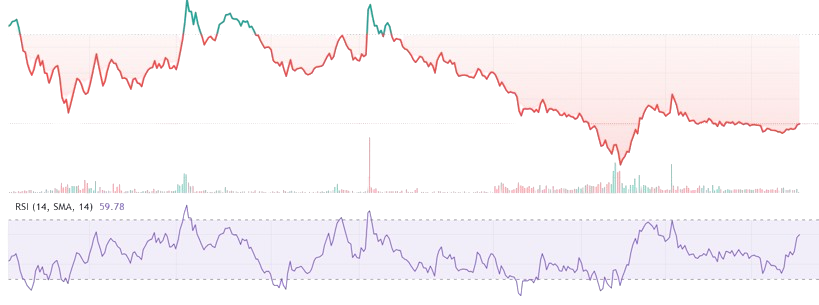
Hercules Investments
Technically, Hercules Investments appears to be the stronger of the two.
The stock has built a base around ₹115–125, RSI has improved to nearly 60, and selling pressure has noticeably reduced. The chart suggests an early Stage-2 breakout attempt under the Stan Weinstein framework, although confirmation would require higher volumes and a decisive move above recent resistance.
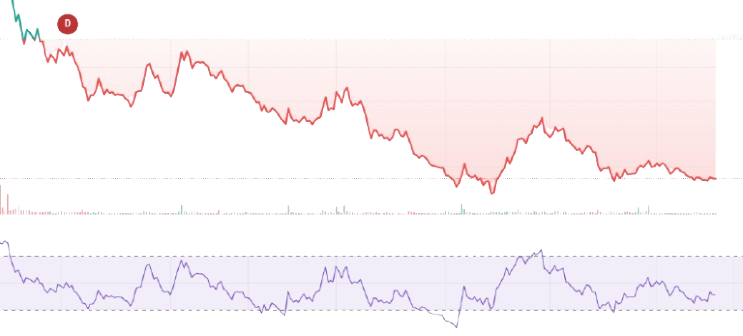
Indef Manufacturing presents a different picture.
Following an initial listing rally and extended correction, the stock has entered a prolonged consolidation phase. RSI remains neutral around 40–45, while declining volumes indicate that selling pressure is gradually easing.
The chart resembles a Stage-1 accumulation pattern, often seen before a sustained trend reversal. A breakout above the current trading range would significantly improve the technical outlook.
The Investment Thesis
This is not simply a story of two listed companies—it is the story of two complementary investment opportunities.
Indef Manufacturing offers participation in India’s industrial growth through an established engineering franchise supported by structural demand drivers.
Hercules Investments represents a classic value-investing opportunity where patient shareholders could benefit if management successfully compounds capital and the market gradually narrows the holding company discount.
The presence of respected long-term investors, combined with Bajaj Group stewardship, adds further credibility to the long-term investment case.
Risks
Investors should nevertheless remain mindful of the key risks:
Slowdown in India’s capital expenditure cycle.
Delays in infrastructure spending.
Competition from global engineering companies.
Persistent holding company discount.
Final Take
The market has so far treated the Hercules–Indef demerger as an ordinary corporate restructuring. Yet history reminds us that extraordinary wealth is often created when ordinary-looking companies quietly execute over long periods.
Among the two, Indef Manufacturing appears to be the stronger long-term business, backed by steady cash generation, a niche industrial franchise, and exposure to India’s manufacturing growth. Hercules Investments, meanwhile, offers a compelling value proposition for investors who appreciate disciplined capital allocation and are willing to wait for the market to recognise intrinsic value.
Technically, both companies appear to be emerging from prolonged consolidation, with Hercules Investments showing earlier signs of momentum while Indef Manufacturing continues to build what could become a durable long-term base.
For investors with a Long-Term investment horizon, both companies deserve a place on the watchlist as potential post-demerger value creators.
Conclusion
The Hercules–Indef story is still unfolding. As the companies establish independent track records, improve earnings visibility, and attract broader institutional participation, the benefits of the demerger may become increasingly evident.
Whether they ultimately join the ranks of India’s successful post-demerger wealth creators will depend on management execution, sustained profitability, and investor patience. For now, both companies possess the characteristics of businesses that merit close attention from long-term investors looking beyond short-term market noise.
Disclaimer: This article is intended solely for educational purposes and reflects the author’s independent analysis based on publicly available information, financial disclosures, and technical chart observations. It should not be construed as investment advice or a recommendation to buy or sell any security. Investors should conduct their own due diligence and consult a qualified financial advisor before making investment decisions.
Let’s Talk: Do you believe the market has fully priced in the Hercules–Indef demerger, or are these two Bajaj-backed companies quietly laying the foundation for the next phase of long-term value creation?
Share your thoughts in the comments. Different perspectives and healthy discussions are always welcome.